Discounted USPS Labels for Smarter Shipping
Discounted USPS labels can cut shipping costs fast. Learn what affects your rate, how to compare services, and where sellers quietly waste money at checkout.
July 16, 2026
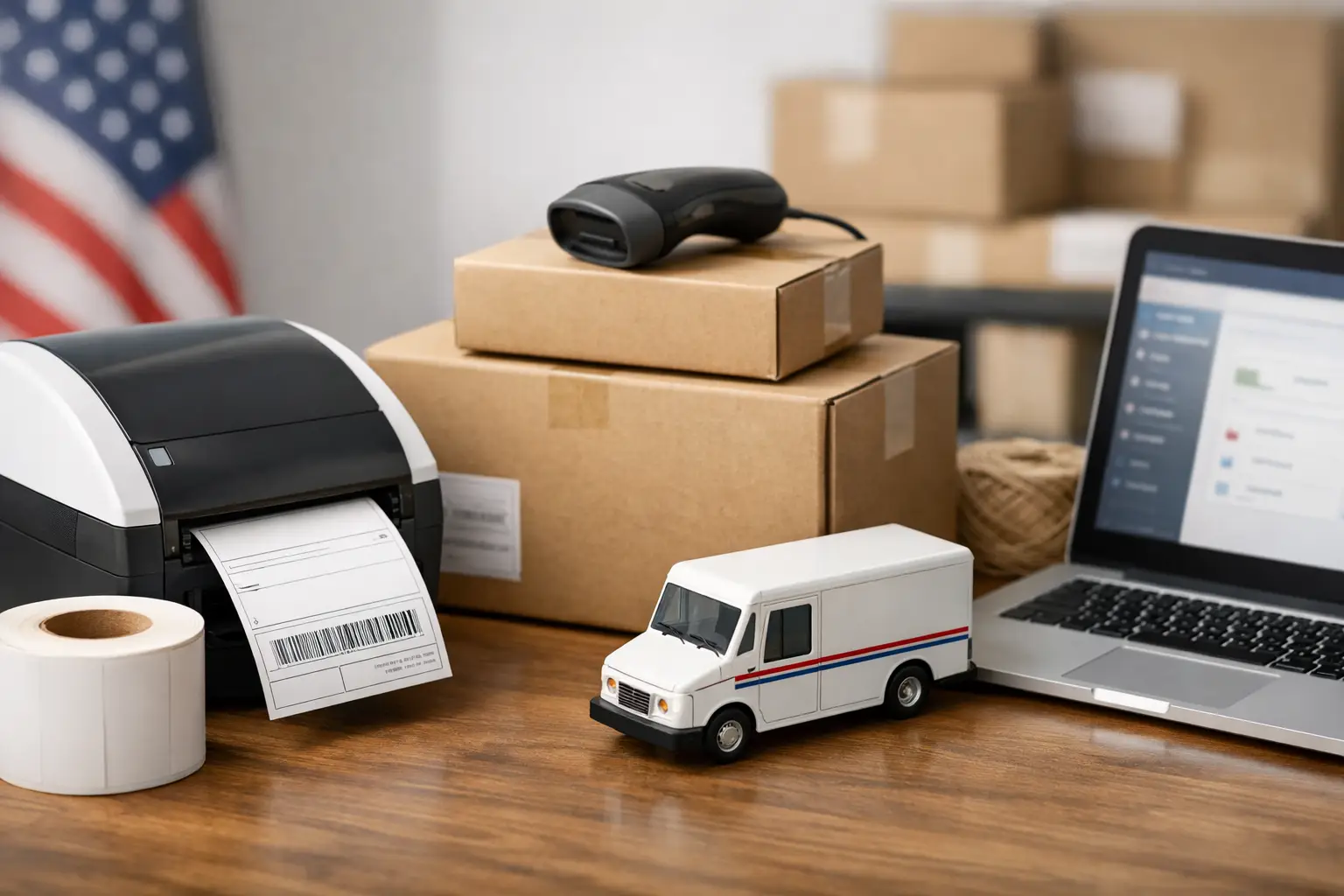
Retail-counter postage is where shipping margins go to get mugged. Discounted USPS labels give ecommerce sellers access to lower business rates without standing in line, guessing at package costs, or treating every order like it needs the same service.
For a seller shipping five orders a week or 5,000, USPS can be a serious cost cutter. But the lowest label price is only useful when it still gets the package to the customer in one piece, on time, and without surprise adjustments. Here’s how to use USPS discounts like an operator, not a hopeful button-clicker.
How discounted USPS labels actually work
USPS offers different pricing depending on how postage is purchased. The rate at a Post Office counter is generally the most expensive route. Shipping software providers and approved postage platforms can offer commercial-style USPS pricing to eligible users, which is why the same box may cost less online than it does at the counter.
That discount is real, but it is not a magic coupon sprayed across every shipment. Your final price still depends on the service, package weight, dimensions, destination, and any applicable fees. A one-pound poly mailer traveling nearby behaves very differently from a bulky box heading to a far-off zone.
The practical win is visibility. When you can see USPS pricing before buying the label, you can choose the service that makes sense for that order instead of defaulting to whatever you used last time. That habit saves more money than most sellers realize.
The USPS services that matter most for online sellers
USPS is often strongest for lightweight packages, residential deliveries, and destinations where other carriers add charges that make a cheap-looking rate suddenly less cute.
USPS Ground Advantage
For most non-urgent ecommerce shipments, USPS Ground Advantage is the workhorse. It handles packages up to 70 pounds and includes tracking. It is commonly a good fit for apparel, accessories, books, small home goods, and other shipments that do not need express delivery.
Ground Advantage is not always the cheapest option, but it is often competitive for packages under a few pounds, especially when shipping to residential addresses. Compare it against UPS and FedEx instead of assuming. The best carrier can change based on zone and dimensions.
Priority Mail
Priority Mail can be a smart move when delivery speed matters or a package is heavy for its size. It also comes with tracking and includes built-in insurance coverage up to the applicable amount for qualifying shipments. That said, “Priority” does not mean “always worth it.”
If the buyer did not pay for faster shipping and Ground Advantage reaches them within an acceptable window, paying extra for Priority Mail is just donating margin to the shipping gods.
Priority Mail Flat Rate
Flat Rate packaging can work beautifully for dense, heavy items that fit the official USPS packaging. The rule is simple: if it fits and weighs a lot, run the numbers. A box full of metal parts may be a Flat Rate hero. A lightweight hoodie in a large Flat Rate box is probably not.
Do not use Flat Rate boxes for the vibes. Compare the Flat Rate price against weight-and-zone pricing first.
Your label price lives and dies by package data
Most avoidable shipping overcharges come from bad package information, not bad intentions. Weight and dimensions need to be accurate before the label is purchased. USPS systems are not impressed by estimates, and neither is your profit-and-loss statement.
A digital scale is non-negotiable. So is measuring the finished package, not the product sitting on a desk before tape, void fill, and a box turn it into something else. Round up thoughtfully when needed, use the correct package type, and make sure the service supports the package you are sending.
Dimensions matter more as boxes get larger. A lightweight item in an oversized carton may cost far more than expected because carriers price large packages differently than compact ones. USPS has size-related rules and fees for certain package shapes and sizes, so the cheapest fix may be better packaging, not a different label.
A simple packaging audit can expose easy savings. Are you using a box that is two inches too long for every shipment? Are you paying for padding because the product rattles around in a carton built for a microwave? Right-size the package and the label price often follows.
Compare the total cost, not just the USPS rate
A discounted USPS label is useful. A rate comparison across carriers is better. The lowest postage price on screen is not always the lowest cost to your business once delivery expectations, insurance needs, pickup logistics, and package characteristics enter the chat.
USPS is frequently a great choice for residential deliveries and lightweight parcels. UPS or FedEx may win for larger boxes, certain zones, or time-sensitive shipments. There is no trophy for loyalty to one carrier when another carrier saves you money on that order.
This is where a multi-carrier platform earns its keep. The Shipping Dude lets merchants compare USPS, UPS, and FedEx pricing in one place, then buy the label without bouncing between carrier sites like it is 2009.
Watch for these four rate killers when comparing options:
- Dimensional size: A big, airy box can cost more than a heavier compact package.
- Delivery zone: The farther a parcel travels, the more service differences tend to matter.
- Add-on protection: Insurance and signature requirements can be worth it, but they are not free.
- Wrong service level: Upgrading every order “just in case” is a fast way to wreck margins.
The goal is not to force USPS onto every shipment. The goal is to give every shipment the cheapest sensible path.
Don’t confuse cheap postage with cheap fulfillment
The lowest possible label rate can still be expensive if it causes customer-service tickets, late-delivery complaints, or damaged orders. Your shipping policy should match what you sell and what your customers expect.
For low-value, lightweight items, a slower ground service may be exactly right. For replacement parts, gifts with a deadline, or high-value orders, speed and added protection may be worth the extra cost. It depends on your product, your margin, and how painful a lost package would be.
Set clear shipping promises at checkout. If an order ships via an economical service, do not market it like a guaranteed two-day arrival. That gap between marketing and reality is where support inboxes get spicy.
A better workflow for buying USPS labels
Buying one label at a time is fine when you are just getting started. Once order volume picks up, manual shipping becomes a tax on your time. The fix is not working later at night with a bigger coffee. It is creating a repeatable workflow.
Import orders, verify addresses, apply saved package presets, compare rates, and print labels in batches. If you ship similar products repeatedly, presets help prevent mistakes and speed up fulfillment. For larger catalogs, connect your stores and keep product weights and package details clean upstream.
Address validation deserves attention, too. A bad apartment number or an incomplete street address can turn a perfectly discounted label into a reshipment. The label price might be low, but sending the same order twice is never a deal.
For USPS packages, schedule pickups or use acceptance scans when available and practical for your operation. Tracking is more useful when the package actually enters the carrier network promptly. A label printed on Tuesday but dropped off Friday is not a carrier problem. That one is on the warehouse.
Where sellers quietly give back their savings
Some merchants save a dollar on postage, then lose three dollars through sloppy fulfillment. The usual suspects are oversize packaging, shipping an order in multiple boxes when one would work, using an express service by default, and failing to review carrier invoices or adjustments.
Returns matter, too. If return shipping is part of your business model, think about it before the first outbound label is printed. Lightweight goods may make sense with prepaid returns; lower-value products may need a return authorization process first. There is no universal answer, but there should be a policy.
Keep an eye on your average shipping cost by product and by destination. If one item is suddenly expensive to ship, do not shrug and call it the cost of doing business. Check its packaging, order mix, and carrier options. Small changes compound fast when you ship every day.
Discounted USPS labels are not just about paying less at checkout. They are about making a smarter decision on every parcel, with clean data, right-sized packaging, and enough rate visibility to stop guessing. Your margins deserve better than the Post Office counter.
