How to Buy Postage Online Without Overpaying
Learn how to buy postage online, compare USPS, UPS, and FedEx rates, print labels at home, and stop paying retail shipping prices on every order with ease.
July 24, 2026
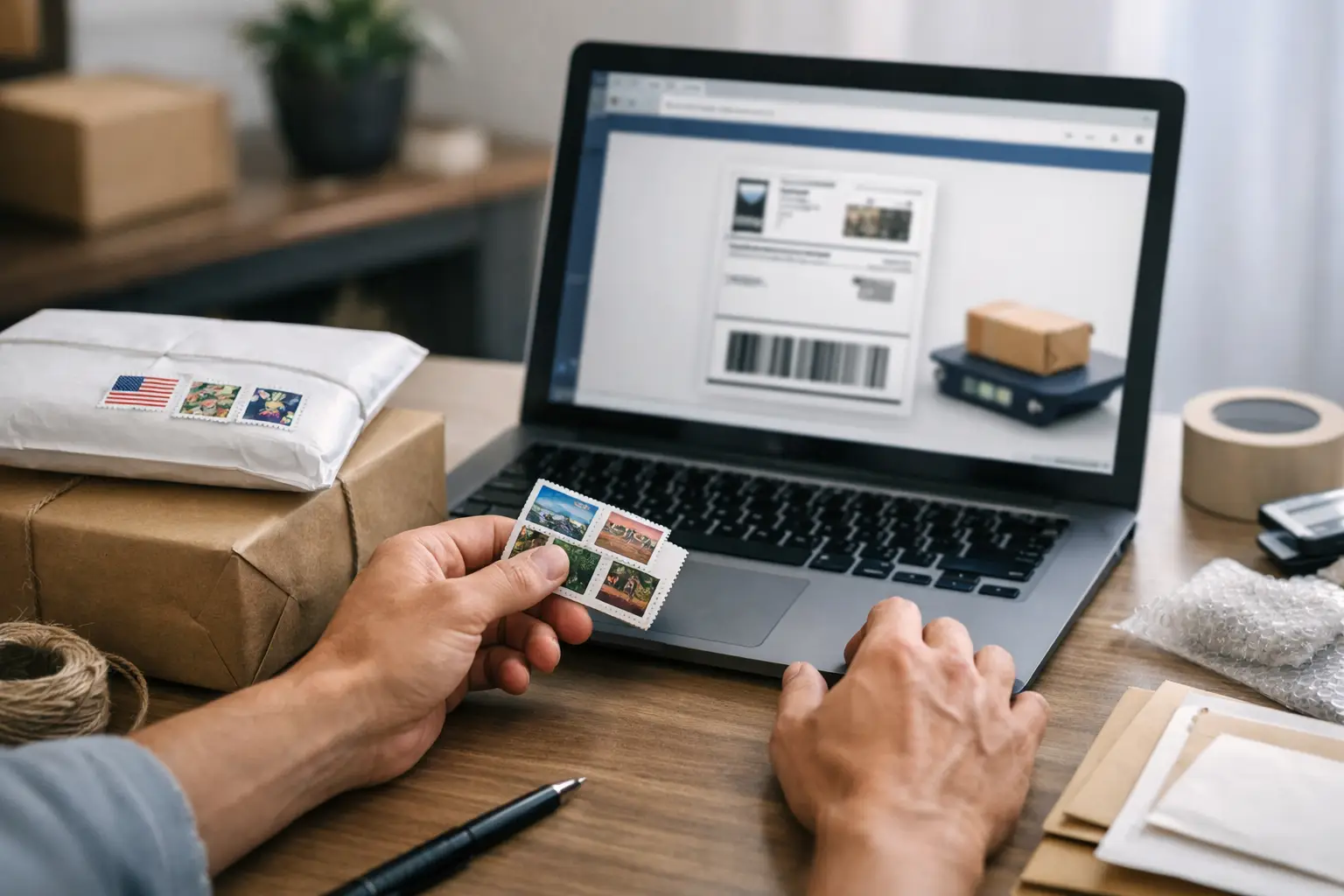
That “quick trip” to the post office gets expensive fast when you are shipping orders all week. There is the drive, the line, the retail postage price, and the little sting of realizing a different carrier could have cost less. Knowing how to buy postage online puts all of that back under your control - from your packing table, warehouse, or couch at 11:47 p.m.
For online sellers, buying postage online is not just about printing a label. It is about comparing the actual cost to ship each package, choosing the service that fits the order, and getting tracking out the door before the customer starts asking questions. Here is how to do it without turning shipping into a part-time job.
What you need before you buy a label
You do not need a warehouse full of gear to purchase postage online. But you do need accurate shipment details. Bad inputs create bad rates, surprise adjustments, and customers wondering why their package is touring three states.
Start with the recipient’s full name and deliverable address. For residential deliveries, include apartment, suite, or unit numbers whenever applicable. An incomplete address can cause delays, address-correction charges, or a package that comes boomeranging back to you.
Next, measure the packed shipment, not the product by itself. Put the item in its box or mailer with the filler, tape, inserts, and whatever else is actually going out. Then weigh it and record the length, width, and height. A kitchen scale works for smaller parcels. For regular shipping volume, a dedicated shipping scale is cheap insurance against guessing.
Accuracy matters because many carrier prices are based on both weight and package size. A lightweight but oversized box can cost more than a compact, heavier one. That is dimensional weight doing its thing, and it does not care that your item weighs less than a bag of chips.
How to buy postage online step by step
The basic process is simple. The smart part is choosing the rate and service that make sense for the specific package.
1. Enter the ship-from and ship-to addresses
Your ship-from address affects the rate, so use the location where the parcel will actually enter the carrier network. This may be your home, storefront, warehouse, or fulfillment location.
Enter the destination exactly as the customer provided it, then use address validation when it is available. Fixing an address before you buy the label is a lot more fun than dealing with a correction fee after the fact. Low bar, but we take wins where we can get them.
2. Add the package weight and dimensions
Enter the weight in pounds and ounces, plus the outer dimensions of the package. Round carefully based on your shipping platform’s instructions, but do not shave numbers to make a rate look prettier. Carriers can reweigh and remeasure packages, then bill the difference later.
If you ship similar products often, save package presets. A saved 10-by-8-by-4 box or standard poly mailer cuts repetitive typing and makes it easier for a team to stay consistent.
3. Compare carrier services, not just carrier names
This is where online postage earns its keep. Instead of checking USPS, UPS, and FedEx one at a time, compare available services side by side. Look at total price, delivery estimate, tracking, insurance options, and any surcharges that may apply.
The cheapest option is not always the right option. A low-value, lightweight order may be perfect for an economical postal service. A heavier parcel headed across the country could price better with UPS or FedEx. An urgent replacement order may be worth a faster service because a bad review costs more than a few extra shipping dollars.
Treat every shipment like its own tiny pricing decision. Carrier loyalty is nice. Carrier loyalty that makes you overpay is just expensive branding.
4. Choose extras only when they earn their spot
Add insurance when the item value and risk justify it. Consider signature confirmation for high-value orders, restricted products, or deliveries where disputes are common. Do not automatically add every available extra to every shipment, though. Those small charges stack up fast across hundreds of orders.
For most routine ecommerce shipments, reliable tracking and good packaging do the heavy lifting. Keep it practical.
5. Pay for postage and create the label
Once you select a service, purchase the label using your platform’s payment method or postage balance. You will receive a shipping label with the address, barcode, service details, and tracking number.
The Shipping Dude lets merchants compare real-time carrier pricing in one place, buy labels quickly, and avoid the usual software nonsense like per-label charges on its entry plan. The point is simple: see the rate, pick the best fit, print the label, move on with your day.
6. Print, attach, and hand off the package
Print the label on a standard printer and tape it flat to the largest side of the package, or use a thermal label printer for a cleaner, faster setup. Make sure the barcode is crisp, uncovered, and not wrapped over an edge.
Cover or remove old labels and barcodes. A package with multiple scannable codes is basically asking for chaos.
Then schedule a pickup if available, drop the package at the appropriate carrier location, or hand it off through an approved acceptance point. Get an acceptance scan or receipt for valuable shipments and anything with a tight delivery promise.
Where online sellers save the most money
Buying a label online can be cheaper than paying retail counter rates, but the biggest savings usually come from better decisions, not magic. The practical wins are in rate comparison, package sizing, and fewer shipping mistakes.
First, compare rates every time the shipment is not a clear repeat. A two-pound package heading nearby may have an obvious best option. A six-pound box going to a residential address in another zone? That is where checking multiple carriers can save real money.
Second, right-size your packaging. Using one giant box for every order is easy until dimensional pricing starts body-slamming your margins. Keep a small lineup of boxes and mailers that fit your most common products. Less empty space can mean less filler, fewer damaged items, and lower postage.
Third, automate repeat work. Connect your selling channels, import orders, save package presets, and use batch label tools when volume grows. The goal is not to make shipping feel fancy. The goal is to stop copying addresses manually and paying for mistakes that should never happen.
USPS, UPS, or FedEx: which one should you choose?
There is no permanent winner. The right carrier depends on package weight, size, destination, delivery speed, and service needs.
USPS is often a strong choice for lightweight parcels, smaller packages, and deliveries to PO Boxes, military addresses, and many residential locations. It can also be useful when you need broad delivery coverage without residential delivery fees that may show up elsewhere.
UPS and FedEx can be competitive for larger, heavier, or higher-value shipments. They also offer service levels that may fit time-sensitive business shipping. But pay attention to the full rate, not the headline price. Residential surcharges, delivery-area fees, and dimensional charges can change the math.
That is why a multi-carrier platform beats the old “I always use this carrier” habit. You want options before you buy, not regret after the package is scanned.
Common mistakes when buying postage online
The most expensive shipping mistakes are usually boring. They come from rushed order processing, assumed package weights, or picking the first service that looks familiar.
Avoid these four repeat offenders:
- Using product weight instead of packed weight.
- Entering box dimensions that are smaller than the real package.
- Selecting a service before comparing the total carrier cost.
- Printing labels before verifying addresses, order contents, and delivery service.
There is also the refund issue. If you create a label and never use it, request a refund through the platform before the carrier’s eligibility window closes. Refund rules vary by carrier and service, so do not let unused labels pile up in a forgotten folder.
Make your shipping process less painful
Once you know how to buy postage online, build a repeatable routine around it. Pack orders in batches, verify addresses before printing, compare rates, print labels, and send tracking as soon as parcels are handed off. That rhythm keeps your fulfillment moving without requiring a spreadsheet circus.
Start with accurate package data and a rate comparison for your next shipment. One better label choice will not transform your business overnight, but repeated across every order, it can give your margins a lot more breathing room.
