How to Ship Ecommerce Orders Without Wasting Money
Learn how to ship ecommerce orders with smarter packaging, live carrier rates, fast label printing, and fewer expensive fulfillment mistakes correctly.
July 14, 2026
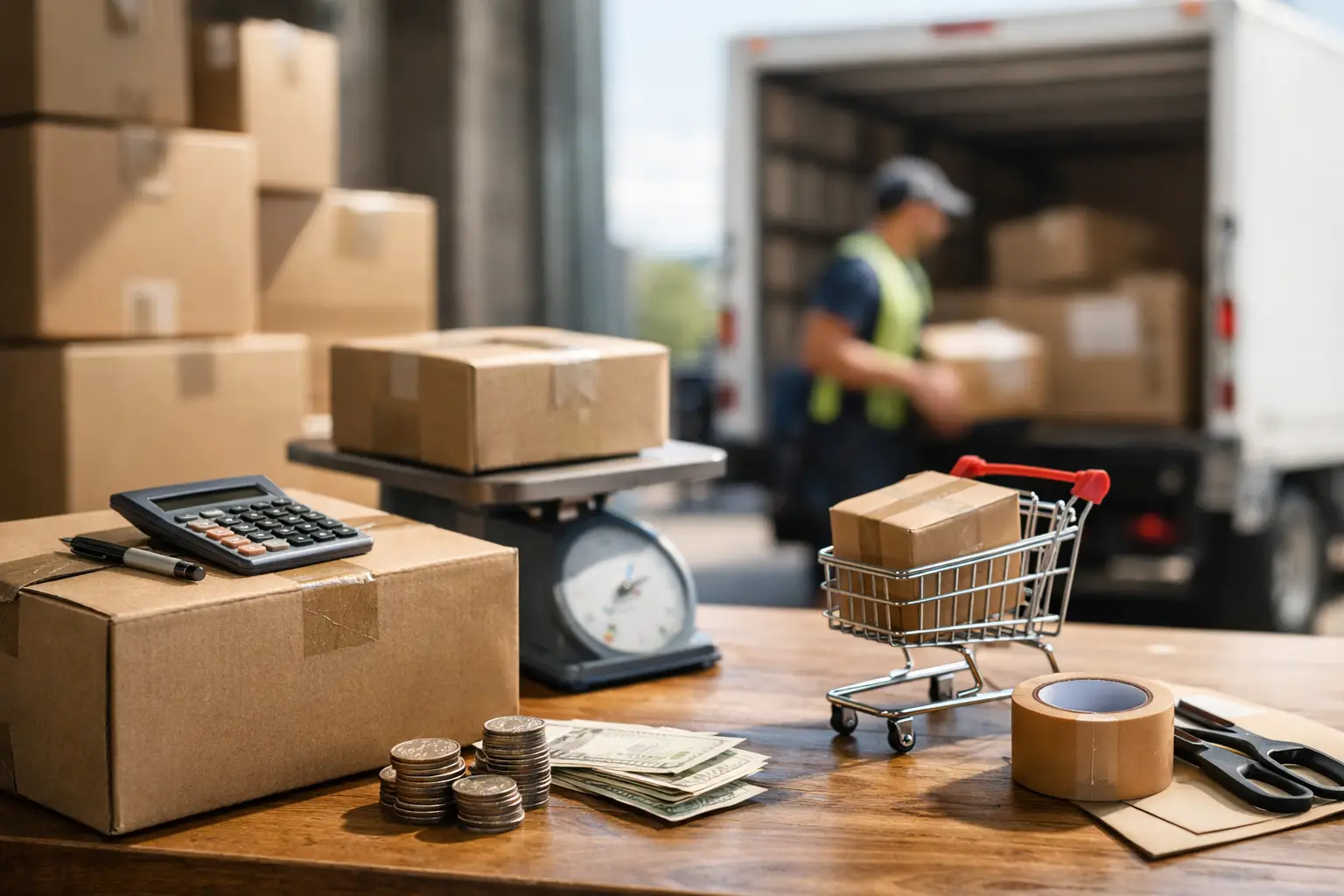
A $7 order can turn into a $19 problem fast. Use an oversized box, buy postage at retail rates, or miss a delivery promise, and your margin gets body-slammed before the package reaches the customer. Learning how to ship ecommerce orders is less about becoming a logistics nerd and more about building a repeatable process that gets packages out fast without lighting money on fire.
This is the practical version. No warehouse jargon. No carrier sales pitch. Just the moves that help online sellers ship accurately, control postage costs, and avoid the kind of fulfillment chaos that makes customers email, “Where is my stuff?”
Start With the Order, Not the Shipping Label
Before you buy a label, make sure the order is actually ready to ship. Confirm payment, review the delivery address, check inventory, and verify whether the buyer chose standard, expedited, or free shipping. A wrong apartment number costs more than an extra 30 seconds of review.
This is also where you catch the exceptions: PO Boxes, military addresses, oversized products, high-value orders, and items that need special handling. USPS can deliver to PO Boxes, for example, while UPS and FedEx generally cannot. If you sell across marketplaces and your own store, keep every order in one queue whenever possible. Bouncing between browser tabs is how labels get mixed up and patience gets murdered.
For most sellers, a good shipping workflow has four checkpoints:
- The order is paid and approved for fulfillment.
- The item is picked and checked against the order.
- The package is weighed and measured after packing.
- The label, tracking number, and customer notification are created together.
That last part matters. Tracking should not be a separate scavenger hunt after the package leaves your hands.
Pick Packaging That Protects the Product, Not the Carrier’s Profit
Packaging is one of the easiest places to lose money because carriers charge based on more than weight. For many shipments, dimensional weight can take over. That means a light product in a giant box may cost more to ship than a heavier product packed efficiently.
Use the smallest durable mailer or box that safely fits the item and its protective material. Soft goods often belong in poly mailers. Small, sturdy items may work in padded mailers. Fragile goods need a snug box with enough cushioning to prevent movement, not a box stuffed with half a forest of void fill.
Measure every package type you use regularly and save those dimensions in your shipping setup. Guessing is fine for game night. It is terrible for postage. If the carrier audits your shipment and finds that the box was larger or heavier than declared, you can get hit with an adjustment later.
There is a trade-off here. The cheapest packaging is not always the cheapest shipment. A slightly pricier box that reduces dimensional weight or damage claims can be the better deal. Test your most common SKUs and see where the math lands.
Compare Carrier Rates Before You Commit
There is no single “best” carrier for every ecommerce order. USPS is often strong for lightweight parcels, residential delivery, and PO Box shipments. UPS and FedEx can be more competitive for larger, heavier, or farther-traveling packages. The winning option changes based on destination, service level, package dimensions, and delivery expectations.
That is why retail counter pricing is a rough way to run an ecommerce business. You need to compare real rates before printing the label, not after you have already paid too much.
A shipping platform such as The Shipping Dude puts USPS, UPS, and FedEx rates in one place, so you can see the price difference without doing carrier-tab gymnastics. Check the delivery estimate alongside the cost. Saving $1.20 is great, unless it turns a two-day promise into a six-day customer service ticket.
When comparing options, look at three things: total label cost, estimated transit time, and whether the service includes the coverage or delivery features you need. Do not automatically choose the lowest number if your product is time-sensitive or expensive. Cheap postage is only cheap until a late or damaged package eats the savings.
Buy the Label and Get the Address Right
Once you choose a service, purchase the label using the exact shipment weight and dimensions. Print it clearly, place it on the largest flat surface of the package, and make sure no tape covers the barcode. If you reuse boxes, remove or completely cover old labels and barcodes. Carriers have enough mysteries to solve without a stale tracking code sending your order on a side quest.
Address verification is worth using, especially when order volume climbs. Customers mistype addresses. Autocomplete tools occasionally get creative. A verified address can prevent returned packages, correction fees, and delivery delays before they happen.
For branded sellers, a packing slip or a simple thank-you insert can improve the unboxing experience. Just keep it purposeful. Do not turn every package into a confetti cannon that adds packing time and makes returns harder.
Schedule Pickup or Drop Off With a Plan
A shipping label is not the finish line. The package needs to enter the carrier network quickly enough to meet the promised delivery window. If you ship daily, carrier pickup can save time and keep fulfillment consistent. If you drop off packages, set a cutoff time and know the latest acceptance scan at your location.
Acceptance scans matter because they create proof that the carrier received the parcel. This is especially useful for marketplace sellers dealing with late-shipment metrics or buyer claims. For a high-value shipment, do not leave the package in an unattended drop box and hope for the best. Get a receipt or use a staffed acceptance point.
Build pickup and drop-off timing into your customer-facing shipping policy. If orders placed before 2 p.m. ship the same business day, make sure your warehouse table, printer, and carrier handoff can actually support that promise. Fast shipping claims are easy to write and expensive to fake.
Send Tracking Before the Customer Has to Ask
The customer does not need a play-by-play from your packing table. They do need a tracking number once the shipment is on its way. Send a clean shipping confirmation that includes what shipped, the carrier, the tracking number, and a realistic delivery expectation.
For split shipments, say so clearly. Nothing makes a buyer assume the worst faster than receiving one item from a two-item order with zero explanation. If an item is delayed, communicate before the customer contacts you. Proactive messages cost less than reactive support.
Keep an eye on exceptions, too. Delayed scans, delivery attempts, return-to-sender events, and address problems should not sit unnoticed for a week. A quick intervention can save an order, a review, and a replacement shipment.
Make Returns Part of the Shipping Process
Returns are not fun, but pretending they will not happen is not a strategy. Decide which products qualify, how long customers have to request a return, who pays for return postage, and whether the item must be unused or in original packaging.
For low-cost items, it can sometimes be cheaper to refund without asking for the product back. For higher-value products, a prepaid return label with tracking gives you more control. The right policy depends on your margins, fraud risk, and product category. A $12 accessory and a $400 electronic device should not be handled like the same problem.
Keep return reasons organized. If “arrived damaged” shows up again and again, you do not have a customer issue. You have a packaging issue. If “not as expected” dominates, your product photos or descriptions may be doing too much creative writing.
Create a Repeatable Shipping Routine
The best way to ship ecommerce orders is the way your team can repeat accurately on a busy Monday, during a holiday rush, or when one person calls out sick. Document the basics: where inventory lives, how items are picked, which packaging each SKU uses, when orders must be processed, and how exceptions get handled.
Then make the setup faster over time. Save common package presets. Batch-print labels when the orders are similar. Keep a reliable scale at the station. Put your most-used mailers, tape, and label rolls within arm’s reach. Tiny workflow improvements add up when you are shipping 20, 200, or 2,000 orders.
Do not chase a perfect operation on day one. Chase fewer mistakes per shipment, cleaner rate decisions, and faster handoffs. Every label is a small business decision. Make it one that protects your margin and gives your customer a reason to order again.
